Stop! It’s Calorie Time

It’s come to this.

Old chicks like me will get the reference. Suffice to say that while I’m pleased to feel satisfied with this way of eating, and while I’m not gaining weight, I don’t seem to be losing any, either.

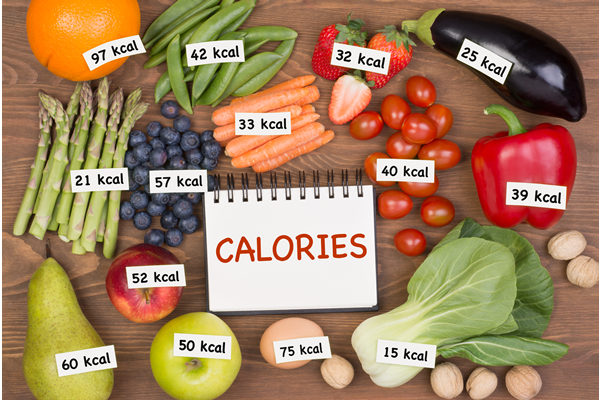
(Deep breath.) It’s calorie time.

I use My Fitness Pal because it’s free, and I’ve been down this road before, but never with whole foods as the basis of my eating plan. It was always “well, I have three hundred calories for lunch, how about a few cookies?”

So we’ll see how I feel this time around. I’m being sensible about my calories: 1500. If I swerve either way from that number just a tad I’m not too concerned, but I’m concerned about my health, and I do feel the need to lose some weight sooner rather than later.

Wish me luck. And be sure to leave me a comment below. Do you believe in calorie counting? Yes/no?

I Know When I’m Full

Whoa. Head blown.

Here’s something interesting I’ve been noticing lately.

A (very little) background: I have always had problems with bingeing and restricting. I’ve never been an in-the-middle person.

One issue I seem to have is that I never know I’m REALLY full. I mean, I feel when my stomach is starting to fill up, but…when am I really “done”? It just goes on and on.

Taking highly processed foods and artificial sweeteners, wheat, and dairy out of my diet, I get that “I’m done” feeling that I’ve had maybe a handful of times my entire life.

I get worried because I’m hungry – and what if I just overeat until I explode? But then I eat whatever it is I was eyeing, grain-free granola or fruit or chicken or whatever it is, and I finish and…I’m done.

I’m full.

Amazing.

One reason I’ve never been able to go all-in on intuitive eating is that I don’t have that “all done” button, somehow. But I have read that with hyper-processed foods, these can override that normal satiety response, so you just keep munching. The food manufacturers do have to make money, you know. Dolla dolla bills y’all.

Interestingly, unless it’s some sort of psyching-myself-out thing, without those particular foods I do find I know when I’m finished.

Very cool stuff, this.

Weekly Weigh-In

Did I lose weight this week?

It’s my first official weigh-in.

The news is…well, okay. I started at 199 and today I’m 198.7.

That might seem like not much (or literally nothing) but considering the fact that I was only going up, holding steady is a good thing.

My appetite seems to be under control and I never go hungry.

I am giving my body time to level out and understand that I WILL feed it (not starve it), and then I’ll see what happens from there, but for now, I’m pretty pleased.

Why Fructose Isn’t All Bad

Fruit may not be the bogeyman it’s made out to be.

Fruit – especially the carefully engineered types of fruit we enjoy today – is a no-no word for certain dietary plans. Take low carb, for instance. Yes, you can eat fruit if you eat it “within your macros.” When it comes to many fruits, that’s not a whole lot, and it may limit you to only certain fruits.

Other lifestyles like the paleo diet often say berries are “better than” other fruits and that “if you want to lose weight, eat less fruit and concentrate on vegetables and protein.”

And increasingly, food lifestyle gurus are shunning fruit for its purported capability of aging the body faster and amping inflammation.

But taking your health and weight loss goals into consideration, is it all true?

Fructose: The Debbil?

The culprit in these assertions is usually not carbohydrates per se, but fructose, one of the two types of sugar usually present in fruits.

Concentrated fruit sugars, as found in some sweeteners like high-fructose corn syrup, are said to compound the negative health issues naturally-occurring fructose can create.

Fructose contains advanced glycation end products (AGEs), which, ironically or not, have been found in some studies to promote aging. They can also be pro-inflammatory, and inflammation can wreak havoc in the body.

Besides AGEs, fructose – at least by itself – is connected to an increase in bodily fat and my even be implicated in non-alcoholic fatty liver disease.

One other factor comes into play: modification of fruits. Genetic engineering is a comparatively recent method, but mankind has been cultivating fruits through cross-breeding for thousands of years in order to be as sweet and large as possible, which usually translates to a higher fructose:glucose ratio.

In fact, we’re going to talk about these two sugars below.

Should You STOP Eating Fruit?

Not necessarily. Here’s why.

While fructose by itself can wreak havoc, especially if isolated and concentrated into a syrup flavoring like high fructose corn syrup, fruit has a second sugar that can balance out these effects, allowing you all the nutrients you need without the degree of damage you’ve heard about.

That other sugar is glucose, a primary source of energy for your body. Fruits (and some vegetables) vary in their ratios of fructose to glucose, but in general, you’ll find a 40-55% ratio of fructose to glucose in fruits eaten whole (not juiced, which concentrates the sugars).

Fiber is another factor. Whole fruit contains fiber, which makes the digestive process a little longer and means a slower, steadier rise and fall of insulin. All of this translates to less immediate conversion to fat and potentially, less hunger after eating the fruit.

My Take

I’m not on paleo (technically, though I’m eating my foods in as whole a way as possible) and I don’t low-carb. I do eat fruits, but I don’t munch on them all day long.

Usually I eat fruit once or twice a day.

That’s just me. You’ll be different because, well, we’re different people. So far, though, my blood glucose levels are fine, and I am feeling pretty good. Time will tell.

Check With Your Doctor

I am not a medical professional. There are certain conditions that warrant little to no fructose consumption, whether glucose is naturally present or not.

Do you eat fruit? How much and what’s your favorite type? Let me know in a comment below.

Can Fast Food TRIGGER Old Addictions?

I quit junk food. And I’m craving a cigarette.

There has been a lot of buzz about the so-called additive qualities of processed foods.

We have all heard of sugar being “as addictive as heroin” (an assertion that’s far from proven), and some researchers are diving into how it’s the specific combination of elements – fat, sugar and salt, for example – that hits on the center that makes us want more. This is supported by certain studies suggesting foods have certain negative effects on the brain.

“But we have to eat,” is the usual answer (mine as well). “How can something we have to do be addictive? We don’t get addicted to breathing.”

The obvious answer is that we don’t get addicted to breathing regular air, no. But if something were added to the air, or if the air was changed in a fundamental way that made us feel very, very good, we just might.

But Not Me! (I Think)

“Not me,” I’ve always said. “That’s so stupid. I haven’t walked two miles in the snow for a candy bar.”

I have, however, done that for a cigarette.

Fifteen years ago I quit smoking for the final time. I had tried for twenty years. I used the patch and was finally successful.

Every once in a blue moon, I’ll pass a smoker and for the next day or so, having breathed in the smoke, I’ll feel a random craving for cigarettes. It lasts about a day. It’s interesting how quickly that happens. A day after that, it’s gone and forgotten.

I Quit Processed Foods and Here’s What Happened

As I close out my first week without sugar, artificial sugars, wheat, dairy or highly processed foods (I do still cook my food, which technically is processing), I find myself suddenly craving, of all things, a cigarette.

I woke with the craving this morning and I’m still struggling with it now. It’s that empty “something is missing…find it NOW” feeling.

If I had access to a cigarette right now I would definitely take a drag. 100%. No question.

This is fifteen years after quitting, folks.

Head blown.

Is Fast Food Addictive?

So, ARE fast and processed foods addictive? Studies suggest they can be, at least in some combinations. For myself, well…this is crazy. And it’s hard. I truly feel as if I’m quitting my smokes for the twentieth time.

I’ll ride it out, but I find the tie-in interesting. IF (that’s a big “if”) food combinations or chemicals, or even categories (such as dairy), hit on certain centers of the brain that trigger cravings for more, then I feel as if I’m living those results right now.

I’m literally going through withdrawal.

Have you experienced something similar? What do you think – can foods be addictive? Sound off below!

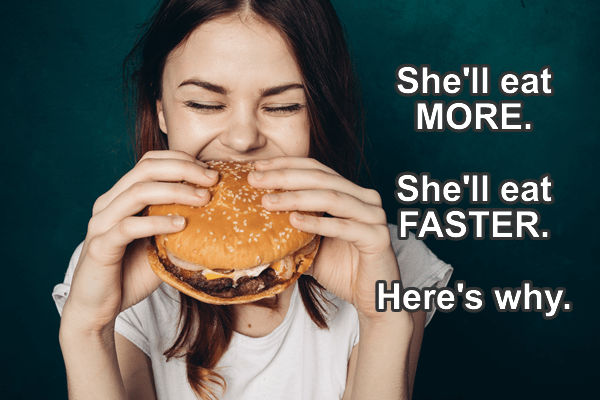
NIH Study: We Eat Faster (and More) When Food is Processed

Here’s why you wolf that burger down.

This surprised me.

I mean I realize there’s a psychology to food – for example, there have been studies where people were told the food was lower in calories, so they ate more regardless of the actual calories.

But I didn’t realize that the pace and amount of food could vary when the food was presented as “the same as” a less-processed dish.

To me, the most interesting point is that the diets were matched exactly in macros – fat, calories and carbs – as well as in sugar and fiber.

The processed-foods group ate 500 calories more per day and gained more weight than the less-processed foods group.

This video explains a study from the National Institutes of Health (NIH) describing the difference in eating behavior when the body takes in highly processed foods. Study was published in the journal Cell Metabolism. Worth a watch! Enjoy!

Why I Gave Up on Low Carb

It didn’t work for me. Here’s why.

There’s little doubt that eating a low-carbohydrate diet quells hunger to manageable levels, largely due to a smaller and slower insulin release following a low-carb v. high-carb meal.

For this reason, I was very attracted to low carb…for a very long time.

I tried it every possible way. Moderately low (40 grams of carbs and under), very low carb (less than 10 grams/nearly “carnivore”), controlled carbs per meal (less than 30 or less than 15)…you name it.

And every single time, I will repeat that, EVERY time, I either binged like a madwoman, or sank into the depths of depression.

Now don’t get me wrong. Not everyone who lives a low-carb lifestyle experiences depression. But for some people, it’s a thing. It may be tied into altered thyroid hormone conversion function, or it may not; thoughts differ. I do have thyroid disease – Hashimoto’s thyroiditis – which I feel plays into these issues.

Whatever the cause, nothing ever seemed to stop the depression reaction, and I wasn’t willing or able to wait it out months to see whether I’d bounce back from “maybe I should just step in front of a car.”

Were We REALLY “Naturally Low-Carb” in Yesteryear? Nah

On top of all that, it just never felt natural to me. The argument goes that we are “meant” to eat very low carb; 30 grams at a maximum, in some experts’ estimation.

I do not see human history that way, nor does the evidence see human history that way. We have always been very opportunistic. We didn’t necessarily eat low-carb in one culture or another. We ate what we could get when we could get it.

Processing Could Be Key

Now the one huge difference is that they weren’t, until more recently (Industrial Revolution and onward), very processed carbs. Food has been processed for possibly 800,000 years, meaning we used fire; yes, that’s processing. And through prehistory, history and into the Renaissance and Enlightenment, processing, like milling flour and making butter, were, of course, parts of eating.

But ultra-processing is more 20th century and beyond, and my personal feeling is that this is the effect it has on my own, and possibly others’, hunger.

It’s the ultra-processing, not “more carbs,” that is the huge change, especially in the late 20th century. At that time we had all kinds of fascinating changes, like more targeted genetic modification of wheat (in the past, it had been mostly down to cross-breeding) and the introduction of high-fructose corn syrup into…well, everything.

Why Low-Carb Doesn’t Work for Me

There are just too many “well, if I can just overcome this tremendous hurdles involved for low-carb to work for me.

Low-carb also doesn’t eliminate the possibility of frankenfoods, such as artificial sweeteners. And I feel those are key in driving my hunger. Remember: I don’t have a specific study on that. It’s just my experience.

The emotional factor – doing without a huge variety of what I love – is just the (sorry) icing on the cake; literally the only payback I get from low-carb is less water, hence a slimmer-looking frame at least right out of the gate, and that doesn’t balance out the negatives for me.

Remember: this is just my experience. What do you think? Do you love low-carb? Hate it? Sound off below! I’d love to hear from you.

What About Sugar?

It’s my kryptonite.

While I’m new to eating whole foods (and probably should be a bit lenient on this HUUUUUGE change), I have yet to conquer the final frontier: sugar.

I realize cane sugar is still sugar. For that matter, so is honey, which is allowed on “whole” food programs like the paleo or primal diets.

Yet I’m clinging to, “Well…it’s not high-fructose corn syrup, so it’s probably okay for now.”

The problem is, when I eat it, I get hungry.

Hungry.

Like this kind of hungry.

And frankly, I’ve been “that” kind of hungry for 45 years. Something’s causing it…that’s the question I’m trying to solve right here, right now.

But I do know that on my first few whole food days, when I didn’t have any sugar – not coconut sugar, not cane sugar, not any added sugar (except as it comes off the tree or from the ground in fruit) – I felt just “normally” hungry, not Langoliers-hungry.

It’s my kryptonite.

Sugar is my final frontier. I am trying hard to get rid now of all the cane sugar, including in ingredients. Wish me luck!

What’s your own final frontier/kryptonite? Sound off below! I’d love to hear from you.

This is Insane. This Guy’s BRAIN Changed on Processed Foods

Proven by MRI…just wow.

This is crazy…this man’s brain scan actually showed changes after eating 80% of his meals as pre-packaged/processed foods for 30 days.

I would have thought such claims were over the top, but you can see for yourself that his brain actually “rerouted” its wiring so that after the experiment, he wanted more of what he’d been getting.

In just 30 days, people!

I’m not affiliated, just wanted to share this with you. Watch here: